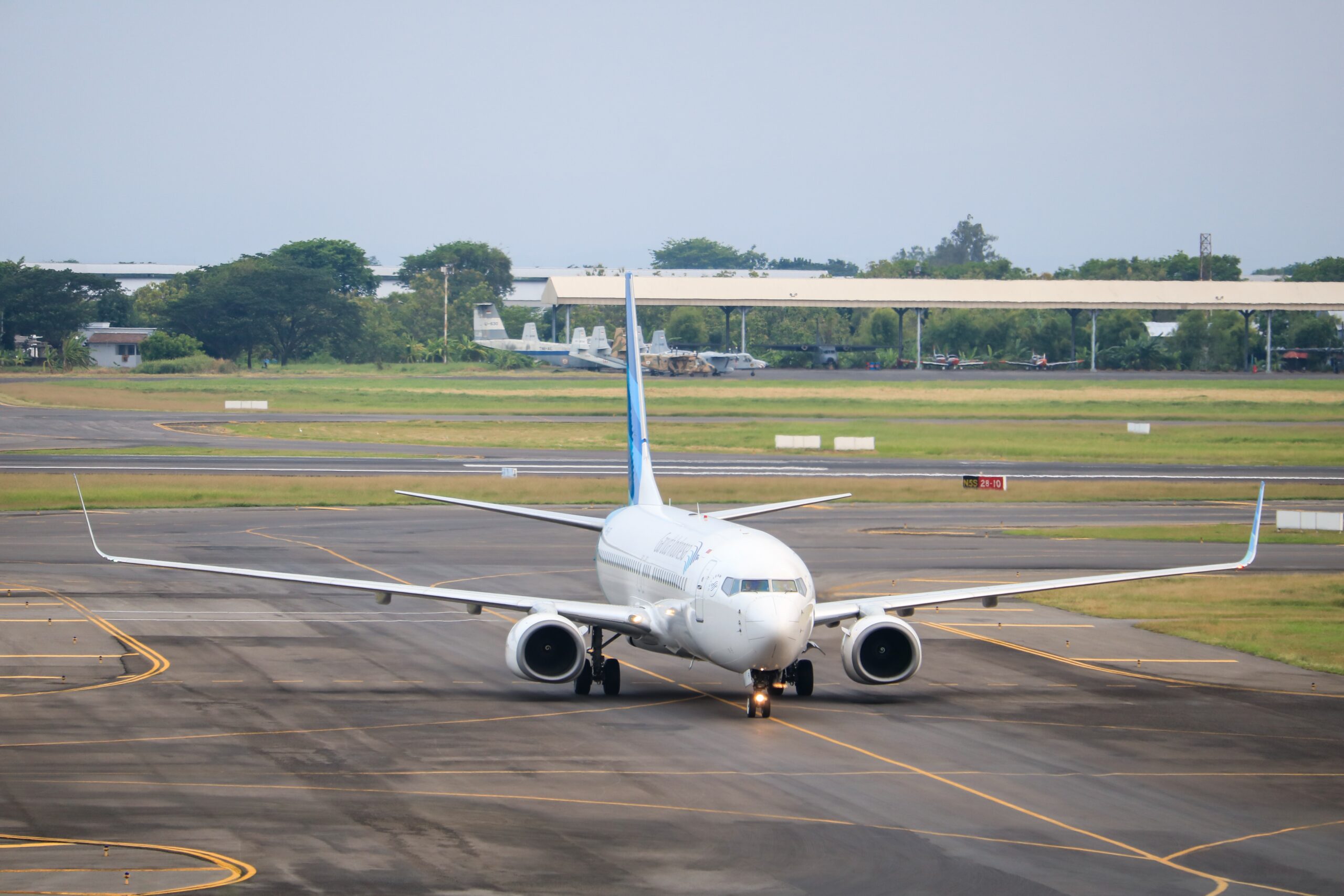
Indonesia, as an archipelago country, for efficiency and speed of logistics for goods and passengers must use air transportation. The growth of Indonesian air transportation boomed around 2000 after the issuance of Presidential Decree No. 33 of 2000 concerning the Revocation of Presidential Instruction no. 1 of 1980 concerning Prohibition of Importation and Granting of Permits to Operate Aircraft.
With the issuance of the Presidential Decree, the Indonesian aviation industry experienced rapid development in terms of the number of scheduled airlines and passengers. However, the rapid development of Indonesia’s aviation world was not accompanied by strict supervision by regulators, so that in 2007 the European Union issued a “fatwa” prohibiting all Indonesian civil airlines from landing and passing through European Union (EU) airspace.
This EU policy hit the Indonesian aviation world because it was considered to ignore aviation safety which had an impact on the world of international civil aviation. Fortunately, with all the hard efforts of the Directorate General of Civil Aviation at that time, the EU lifted the flight ban on all Indonesian airlines on June 14 2018.
It was hoped that with the lifting of the flying ban by the EU, Indonesian civil aviation would progress rapidly, but in reality it is currently declining because it cannot compete with foreign airlines. The Umrah market, which has been fertile ground for domestic airlines for years, has been on bond and is slowly but surely being eaten away by foreign airlines. The storm continued when Covid-19 came and the high price of aviation fuel.
The Indonesian civil aviation industry continues to decline, after being hit by Covid-19, the national airline Garuda Indonesia Group fell into a coma due to the financial crisis and poor management. As a result, up to now 70% of the share of civil aviation in Indonesia is only controlled by one group. The rest got the crumbs due to the lack of pockets and the number of planes.
Field Conditions
During deregulation there was a surge in the number of airlines from only five to fifteen airlines, and three classes of scheduled civil flights emerged: full, medium and low cost services. Flight ticket prices, which before deregulation were regulated by the government, have become a market mechanism. The government only regulates upper and lower ticket prices so that healthy competition arises in the market. The number of passengers also increased to 60 million in 2012 due to movement from other modes, especially on the island of Java.
However, this condition did not last long, and now it has returned to the gloomy cycle of the aviation industry. It’s already a yellow light turning red. From data from the Directorate General of Civil Aviation of the Ministry of Transportation for 2023, of the 1,499 registered aircraft, there are only 1,116 aircraft whose Air Operator Certificate (AoC) or permits are still valid. There are two AoCs, namely AoC 121 (certificate given to airlines that operate aircraft with a capacity of more than 30 seats) and AoC 135 (certificate given to airlines that operate aircraft with a capacity of less than 30 seats).
If we go back into the data on planes that can still fly, our hearts will become even more sad reading it. From data from the Ministry of Transportation for August 2023, there are only 400 aircraft with AoC 121 and only 217 aircraft with AoC 135 that can serve consumers. The quality of our current air transportation services is terrible. Of that number, around 70% is served by the Lion Group (Lion, Batik, Wings and Super Air Jet).
It was hoped that with the lifting of the flying ban by the EU, Indonesian civil aviation would progress rapidly, but in reality it is currently declining because it cannot compete with foreign airlines. The Umrah market, which has been fertile ground for domestic airlines for years, has been on bond and is slowly but surely being eaten away by foreign airlines. The storm continued when Covid-19 came and the high price of aviation fuel.
Still based on data from the Ministry of Transportation, as of August 30 2023, the fleet of scheduled commercial passenger aircraft (AoC 121 and 135) only has 393 aircraft ready to operate (GA Group: 96, LAG: 223, Pelita Air: 7, Susi Air: 27, Sriwijaya Group: 5, Trigana: 7 and Transusa: 5) because the remaining 173 aircraft were under maintenance and did not fly or were prohibited from flying by the lessor. Even those who are still flying are not in very good condition; Some of them have problems but are still fit to fly according to the standards of the Directorate of Civil Aviation, but are still risky to fly. Especially if the weather is bad and requires excellent crew and aircraft.
Hundreds of aircraft that are grounded cannot be repaired immediately because spare parts are difficult and expensive or are prohibited from flying by lessors (due to arrears in installments) and so on. Aircraft spare parts are currently rare in the world and are expensive as a result of mutual embargoes in the case of the Russia-Ukraine war. As we know, metal as the basic material for making aircraft parts comes from Russia, while the industry is in Europe and America. So the impact of the Russia – Ukraine conflict has spread to the world aviation industry as a whole.
This condition is exacerbated by the price of aviation fuel which continues to increase as a result of the US and Saudi Arabia reducing their quotas and also the weakening of the rupiah. The average price of aviation fuel as of September 23 2023 is IDR 17,000 per liter and will reach IDR 19,000 per liter including tax. So today, don’t expect cheap tickets, including low cost carriers. So what will happen to our national airline, Garuda Indonesia? What is clear is that bills to lessors will pile up and aircraft operating and maintenance costs will also increase.
Government Steps
With the high price of plane tickets and the decline in people’s purchasing power, it is certain that domestic plane passengers are not tourists. The number of domestic tourists has decreased drastically. Currently scheduled airplane passengers are ASN Ministries/Agencies (70%) and the rest are in the business sector. 75% of aviation service users on the island of Java have switched to other modes of transportation, such as private vehicles, buses/travel and trains which are cheaper, especially if traveling together.
The lack of and high cost of spare parts has restarted the parts cannibalism business of the airline boom years. If such conditions are not implemented closely, it will increase fatal aviation accidents. The weather will soon get worse, regulators must work hard to implement existing laws and regulations as strictly as possible, including ICAO regulations and Law no. 1 of 2009 concerning Aviation.
Don’t hesitate to ground unairworthy aircraft. It is recommended that the aircraft be inspected before flying or a ramp check should be carried out again. Also ensure that the used or reconditioned spare parts market does not operate again like the days of ignorance for the sake of aviation safety.
The Directorate General of Civil Aviation must be clear that if the aircraft is still fit to fly but there is damage that technically does not interfere with flight safety but interferes with flight comfort, such as the failure of the A/C or Auxiliary Power Unit (APU), and so on, the aircraft must be immediately grounded for flight safety. in total.
If tickets become more expensive, there should be a competent policy from the regulator, as is done by other countries. For example, all scheduled civil flights must be low cost, the most important thing is that tickets are affordable, operational costs are covered, and flight safety remains paramount; or elimination of import taxes on spare parts and so on.