A. INTRODUCTION
In commemoration of the anniversary of the International Civil Aviation Constitution on 7 December 194464 which gave birth to the International Civil Aviation Organization (ICAO) on 4 April 1944, this article will reveal the historical events of the Cold War between the West led by the United States (US) and the east led by the Soviet Union. In the COLD WAR we will discuss the chronology of the western block vs the eastern block; the cold war, NATO and the Warsaw Pact; the rivalry between the Soviet Union and the United States included the ideologies of the United States and the Soviet Union, economic assistance to Turkey, development of nuclear weapons, espionage (spying); TU-144 and Concorde espionage (spy) aircraft; space technology competition; supersonic airship race; bridge to world peace, while CASE KAL007 discusses flight KAL007; civil reconnaissance aircraft; compensation for KAL007 passenger losses including the legal basis and amount of compensation for KAL007 passenger losses; human rights (HAM); claim operational costs; airspace violations; the international community’s response; violation of Article 3 bis of the 1944 Chicago Convention; alleged RC-135 reconnaissance aircraft; alleged United States spy; targeted assassination of a member of the United States Congress; United States President Ronald Reago’s response was as follows:
B. COLD WAR SOVIET UNION vs UNITED STATES
This item discusses the chronology of the Western Block vs the Eastern Block; the cold war, NATO, and the Warsaw Pact; the rivalry between the Soviet Union and the United States included the ideologies of the United States and the Soviet Union, economic assistance to Turkey, development of nuclear weapons, espionage (spying); TU-144 and Concorde espionage (spy) aircraft; space technology competition; supersonic airship race; bridge to world peace as follows:
1. Chronology of West Block vs East Block
The United States (US) and the Soviet Union were members of the Allied bloc and fought together against the Axis bloc during the Second World War (WWII), they were in the same ranks, however, the two parties were actually at odds because of ideological differences. The United, States had long been suspicious and worried about the development of Soviet communism and was concerned about the Soviet Union’s tyrannical government, while the Soviet Union resented the United States’ dismissive behavior in the international community. The Soviet Union was also furious because the US did not move quickly to enter WWII at that time. Towards the end of WWII, the seeds of hatred between the two sides grew bigger. The alliance of the US, UK, and the Soviet Union began to disintegrate. The seeds of hatred became mutual distrust and extraordinary hostility.
The United States (US) was not only the winning country in the Second World War (WWII), but the US was also the country that caused its allies to be on the winning side. The Soviet Union on the other hand emerged as a giant country, whose position could be equated with the US, indeed having everything, namely the greatest military power, advanced industry, and atomic weapons as a monopoly, however, US power in Europe was reduced gradually, in line with The US’s own plan aims to create peace. Autonomy and democracy, free trade, freedom at sea, the absence of investment boundaries, and open-door politics are the principles that demonstrate the US’s desires. As the strongest and richest nation in the world, as well as the nation with the largest industry and strongest finances, the US will gain greater benefits if it is developed on a global level, while the Soviet Union on the other hand is indirectly a rival power to the US. From the Soviet Union’s point of view, the expansion of its borders and the domination of formally independent regions in Eastern Europe were necessary for the security of the Soviet Union. This was considered reasonable compensation for the defeats the Soviet Union had experienced in its previous war.
In line with the emergence of two world giants, nationalism in Asia, which had always been suppressed by Western countries, flared up fiercely and could not be contained and independent countries emerged in Asia, namely Indonesia, India, Pakistan, Burma, Cambodia, and the Philippines. Some of these independent countries joined countries in Africa to form a third bloc group, called the Non-Aligned Movement (NAM). This means that they do not side with the Western democracies (United States) or the communist group (Soviet Union). The political developments of the two blocs dragged them into the Cold War. Evidence of the emergence of competition between the Western Bloc and the Eastern Bloc began when Josef Stalin and his foreign minister, Vyacheslav Molotov, made public speeches in February 1946. Both stated that Western democracy was their enemy. One month later, Winston Churchill expressed his view in a speech in Fulton, Missouri that the Soviet Union’s actions in Eastern Europe were a sign of danger. He spoke of an “iron wall” that had been erected in Europe. The wall has separated freedom and democracy in the West from areas in the East through several restrictive regulations. He signaled Western democracies to fight communism and urged unity and strengthening of the West as a response to the chaos.
The US desire to reduce the widespread use of atomic weapons and control them under international control was rejected by the Soviet Union which resulted in the US continuing to secretly develop their atomic weapons to overcome the growing use of Soviet Union atomic weapons which was the beginning of the nuclear arms competition between the two powers. . Western defense against what they saw as the “stubbornness” of the Soviet Union and communist plans for subversion and expansion took shape in 1947. Since 1944, a civil war had raged in Greece between the royalist government formed by Great Britain and rebels supported by other countries. communist countries, especially Yugoslavia. In 1947, Great Britain asked the United States to help Greece and Türkiye financially. This was because both countries were under pressure from the Soviet Union and their conditions were very worrying (in this case poverty). On the one hand, the Western Bloc felt the need to secure the Dardanelles Strait area, while on the other hand, poverty was fertile ground for the development of communism. Thus, the United States felt an interest in helping him.
2. Cold War, NATO and the Warsaw Pact
The Cold War was a competition between communist countries led by the Soviet Union and anti-communist countries led by the United States (US) for influence in the world. As mentioned above, the United States was actually an ally of the Soviet Union in the second world war, hostile to Germany, but after the Second World War ended, in 1948 the Soviet Union succeeded in suppressing all political and economic activities of non-communist countries in Central Europe and Eastern Europe, then on April 4 1949 the United States formed the North Atlantic Treaty Organization (NATO), which is an international military organization consisting of the US and 27 member countries in Europe and one Eurasian country to stem the influence of the Soviet Union. When NATO was founded in Brussels, Belgium in 1949 it only had 12 member countries,67, the Soviet Union was triggered by West Germany which joined NATO, then the Soviet Union on May 14 1955 established the Warsaw Pact in Poland in response to the formation of the international military organization NATO, however after The Cold War ended in 1991, the Warsaw Pact was dissolved, while NATO remained with changes in its function and role.
3. Soviet Union vs United States (US) rivalry
During the Soviet Union vs US cold war which lasted 44 years from 1947-1991, it was not seen using force of arms, but competition in the form of ideology, economics, spying (espionage), and development of nuclear weapons consisting of various forms of hydrogen bombs, nuclear weapons, missiles. , defense, outer space activities, etc. The two competing superpowers are competing to produce an arsenal of more than 10,000 warheads. In the economic field, the US helped Turkey when it experienced an economic crisis, while in the ideological field, the United States helped the right wing of the war in Vietnam and Korea, while the Soviet Union helped the left wing along with China.
a. US vs USSR Ideological Rivalry
The Cold War since around the 1950s was a period known as an ideological conflict between the United States and the Soviet Union and their respective allies. Tensions between the two superpowers lasted until 1991, triggered by differences in ideology. The United States’ ideology was liberal, individual, freedom of free trade based on market law (supply and demand), while the Soviet Union’s ideology was social, all ownership was controlled by the state, and there was no control by the private sector, while the Soviet Union and its allies who developed communist ideology spread it to various regions of other left-leaning countries. In the Viet Nam War and the North Korean War led by the United States, the Soviet Union helped the left wing while the United States helped the right wing.
b. Economic Assistance to Türkiye
In 1952, during the Cold War, relations between the United States and Turkey were very close, Turkey joined the war with Korea led by the United States, Turkey provided United States military base facilities, while the United States provided large economic and military assistance to Turkey. Economic assistance during the Cold War greatly influenced the global economy by implementing a liberal and capitalist economy throughout the world. In addition, the Cold War had an impact on technological developments including outer space exploration.69
c. Nuclear Weapons Development
The Cold War was initially an ideological conflict involving countries supporting liberal democracy and communists to fight for influence and role in the world. The United States and the Soviet Union were the main actors in the Cold War, who did not directly clash on the battlefield. Apart from the struggle for influence, the most striking form of the Cold War was competition over weapons technology and outer space technology. The development of weapons technology during the Cold War increased rapidly, one of which was nuclear weapons. The discovery of the space shuttle, which was originally a Cold War- era nuclear arms race between the US and the Soviet Union, proved the largest and most expensive arms race. The era of nuclear development actually began during the Second World War (WWII), but reached its peak during the Cold War. During WWII, England, the US, and the Soviet Union both started projects to make atomic bombs. Later, Britain joined the US nuclear development program known as the Manhattan Project, while the Soviet Union was still relaxed. This is different from England and the US, which are afraid of being overtaken by Germany.
In August 1945, the fruits of the Manhattan Project were used to end the Second War (WWII) by atomic bombing of two cities in Japan, Hiroshima and Nagasaki. It turned out that the bombing was not discussed with the Soviet Union, which was a US ally in WWII. At that time, Soviet leader Joseph Stalin considered US action an anti-Soviet step, then bombing Hiroshima and Nagasaki, Stalin signed a decree establishing a Special Committee on the atomic bomb. Since then, nuclear weapons have become an emergency program of the Soviet Union. The situation heated up after WWII, the US was worried about the Soviet Union’s communist expansion. The nuclear arms race during the Cold War officially began in 1949, when the US produced more atomic weapons and the Soviet Union began testing their atomic bombs.
The development of nuclear weapons during the Cold War In 1952, when the US tested a hydrogen “super bomb” which could cause enormous damage, followed by the Soviet Union the following year, then the US and the Soviets both tested their first intercontinental ballistic missiles. Even though the US missile power was superior, there were concerns that the Soviet Union had more powerful nuclear weapons. Both parties are trying to increase the quality and quantity of weapons equipped with nuclear equipment. The US and Soviet Union increased their arsenals to more than 10,000 warheads. Forms of weaponry began to vary, for example, short-range missiles, nuclear warheads, nuclear-powered submarines, medium-range missiles, intercontinental missiles, etc.
The nuclear arms race escalated to a new level that raised world fears of nuclear war. The 1980s marked a new stage in the development of the Cold War. The US and Soviet Union both reduced their nuclear weapons which greatly helped calm world tensions. Serious negotiations on reducing nuclear weapons were carried out by both parties. In 1987, the US and Soviet Union signed the Intermediate-Range Nuclear Forces Treaty (INF), to limit the scope and range of all types of missiles. Negotiations on an anti-nuclear weapons agreement continued to develop, even until the Cold War ended in 1991 with the collapse of the Soviet Union.
d. Espionage (Spying)
In the cold war between the West led by the United States and the East led by the Soviet Union, the US Central Intelligence Agency (CIA) had an important role like a playmaker on a football team. Various secret operations were carried out to overthrow regimes in countries affiliated with enemy blocs. These operations can take the form of propaganda, political designs, and even support of funds and weapons to the opposition. During the Cold War, much of the CIA’s work focused on the Soviet Union’s military and military-industrial complex espionage, namely covert intelligence gathering and special and often illegal covert operations, including subversion. Activities were carried out under various guises, including the diplomatic cloak used by nearly all intelligence agencies, as well as companies and other “front” enterprises founded or acquired by the CIA.
Although some covert operations were complex, they represented only a small portion of the CIA’s overall budget. The information obtained through these satellites is very important for the arms control process; indeed, agreements reached during the Strategic Arms Limitation Talks (SALT) in the 1970s specifically mentioned the use of satellites to monitor weapons development, while aerial reconnaissance yielded detailed information on issues such as Soviet wheat harvests and Soviet ballistic missile development.
Since the 1950s, spying activities have been carried out by the RB-47 aircraft, a Dakota DC-3 or C-47 type aircraft belonging to the United States which flew over Sakhalin, accompanied by fighter aircraft into the territory of the Soviet Union. After entering Soviet territory, the Dakota DC-3, C-47 aircraft was shot and crashed, then the pilot was tried for an action that violated the national laws of the Soviet Union. Apart from that, in the 1960s, U2 aircraft belonging to the United States also carried out spy flights over Soviet Union airspace. The U2 aircraft, which is capable of flying above 76,000 feet, was also shot at by fighter aircraft air combat pilots were later tried for violating the Soviet Union’s national laws.
5. Competition in Space Technology
At the time of the Cold War between the East led by the Soviet Union and the West led by the United States in the form of artificial satellites the Soviet Union succeeded in launching the Sputnik I satellite in October 1957 and the US succeeded in launching the Explorer I satellite. The Cold War between the US and the Soviet Union This has a positive influence on outer space technology which is experiencing rapid development, for example, the successful launch of satellites which have many benefits for life on earth, the discovery of space shuttles, rockets, and so on.
The end of World War II in 1945 did not necessarily make the world safe and peaceful, in fact, the emergence of the superpowers US and Soviet Union as winners of the war brought the world into a new phase of the Cold War (1947-1991) which lasted almost half a century, making the world’s political constellation split into two, namely the Western Bloc led by the US and the Eastern Bloc led by the Soviet Union. The battle, which was initially based on ideological differences between capitalists and communists, then continued in competition in the fields of weapons and space technology. During the Cold War, apart from wars on Earth, there were also wars in outer space. This competition is usually known as Star Wars. The form of competition in outer space between the US and the Soviet Union included sending outer space missions which functioned to explore the possibility of placing military equipment, communications, and espionage in outer space. Sending this mission is a psywar effort to demonstrate technological superiority to the opposing party. US competition with the Soviet Union to develop space technology began in the 1950s. The two countries took turns showing their sophistication in the field of space technology. The Soviet Union preceded the US, marked by the launch of Sputnik 1 on October 4, 1957, which was the first satellite launched into outer space. The success of the launch of Sputnik 1 was surprising and made the US feel like they had missed out, especially on November 3, 1957, when the Soviet Union launched Sputnik 2 carrying a dog named Laika which became the first animal to go into outer space.
On July 29 1958, the US launched Explorer 1 to catch up with the Soviet Union and established the National Aeronautic and Space Administration (NASA), a space agency designed to explore outer space to explore outer space. In addition, the US also created two national security-oriented space programs that operated simultaneously with NASA’s program. In 1959, US competition with the Soviet Union in space technology heated up. The Soviet Union again excelled by launching Luna 2, the first spacecraft to reach the moon, followed in April 1961, where cosmonaut Yuri Gagarin became the first human to successfully travel to outer space and orbit the Earth with a spacecraft called Vostok 1.
The US, through NASA, designed a spacecraft that was lighter than Vostok 1 and carried out tests carrying chimpanzees in March 1961. On May 5, Navy Commander Alan Bartlett Shepard Jr became the first US person to be launched into outer space. Before the end of the 1960s the US was going to land humans and NASA’s budget was increased by 500 percent to support the human landing program on the Moon called Apollo which experienced obstacles when three astronauts died due to their spacecraft catching fire during a launch simulation in January 1967, while the landing program The fate of the Soviet Union was unclear due to internal conflicts. In December 1968, the US launched Apollo 8, the second manned space mission of the Apollo program which became the first mission to take humans to the moon. The US officially surpassed the achievements of the Soviet Union in July 1969 with the launch of Apollo 11, which was the first manned space mission to successfully take humans to the moon and back safely. The impact of the US Cold War with the Soviet Union had a positive influence on space technology which was developing rapidly, such as the launch of satellites with many benefits for life on Earth, the discovery of space shuttles, rockets, etc.
6. Supersonic Airplane Race
During the Cold War between the East led by the Soviet Union and the West led by the United States (US), Britain, and France 1962 signed a collaboration to make the Concorde supersonic commercial aircraft, while Nikita Khrushchev, the Soviet Union, had secretly ordered the engineers flights to search for information to develop supersonic aircraft. In America, the supersonic aircraft project was undertaken by American manufacturers Lockheed and Boeing; but was hampered by budget and environmental problems. During the cold war, Britain and France succeeded in making supersonic commercial aircraft, while the Soviet Union was years behind in the race in the field of supersonic aircraft for espionage, therefore the head of the Aeroflot Branch, Sergei Pavlov in France, recruited a network of members of the French Communist party. They were paid as informants to infiltrate the Concorde Aerospatiale factory in Toulouse, France. In 1965 Pavlov was deported by the French, after plans for the Concorde’s landing gear were found in his briefcase, however, over the years, secret agents reportedly continued to steal thousands of documents and blueprints in one of the industrial espionage operations according to a Central Intelligence Agency (CIA) report. The US further declassified the spy network even including a pair of Czechoslovakian priests. They helped smuggle reels of micro-film of the Concorde plans, in tubes of toothpaste carried by spies posing as tourists on the Ostend-Warsaw Express.
Inside the British Aircraft Corporation factory, a British spy codenamed “Ace” was also suspected of funneling thousands of secret documents to the Soviet Union. Thanks to this spy network, the Soviet Union was not only able to catch up with the West; but was also able to fly three months before the first test of the Concorde supersonic aircraft. On December 31, 1968, a TU-144 emerged from a secret hangar near a snowy Moscow airstrip. The TU-144 aircraft soared into the cold skies in a successful 38-minute test flight. Just days after Apollo 8 returned from orbiting the moon, the Soviet Union staged a propaganda coup of their own. The Soviet plane’s sleek fuselage, needle nose, and delta wings looked so similar to the Concorde that the press nicknamed it the “Konkordski.”
The TU-144 supersonic aircraft was redesigned with a pair of insect wings behind the cockpit to assist lifting. The aircraft arrived at the 1973 Paris Air Show for the supersonic aircraft competition with Concorde. On June 3, 1973, Konkordski went on the air immediately after a perfect demonstration by his rival. The crowd watched as the Soviet jet made a steep dive before violently leveling off, but then the TU-144 plunged suddenly, began to break apart and crashed into a fireball that scorched a neighborhood in the village of Goussainville. The crash killed six crew members and eight people on the ground, including three children who were playing outside. Authorities reported that the black box flight recorder was destroyed in the crash, and Soviet and French investigations blamed the pilot for the crash, however, in subsequent years, it was revealed that a French Mirage fighter aircraft took to the skies moments before the supersonic jet, for took a photo of the TU-144 in flight.
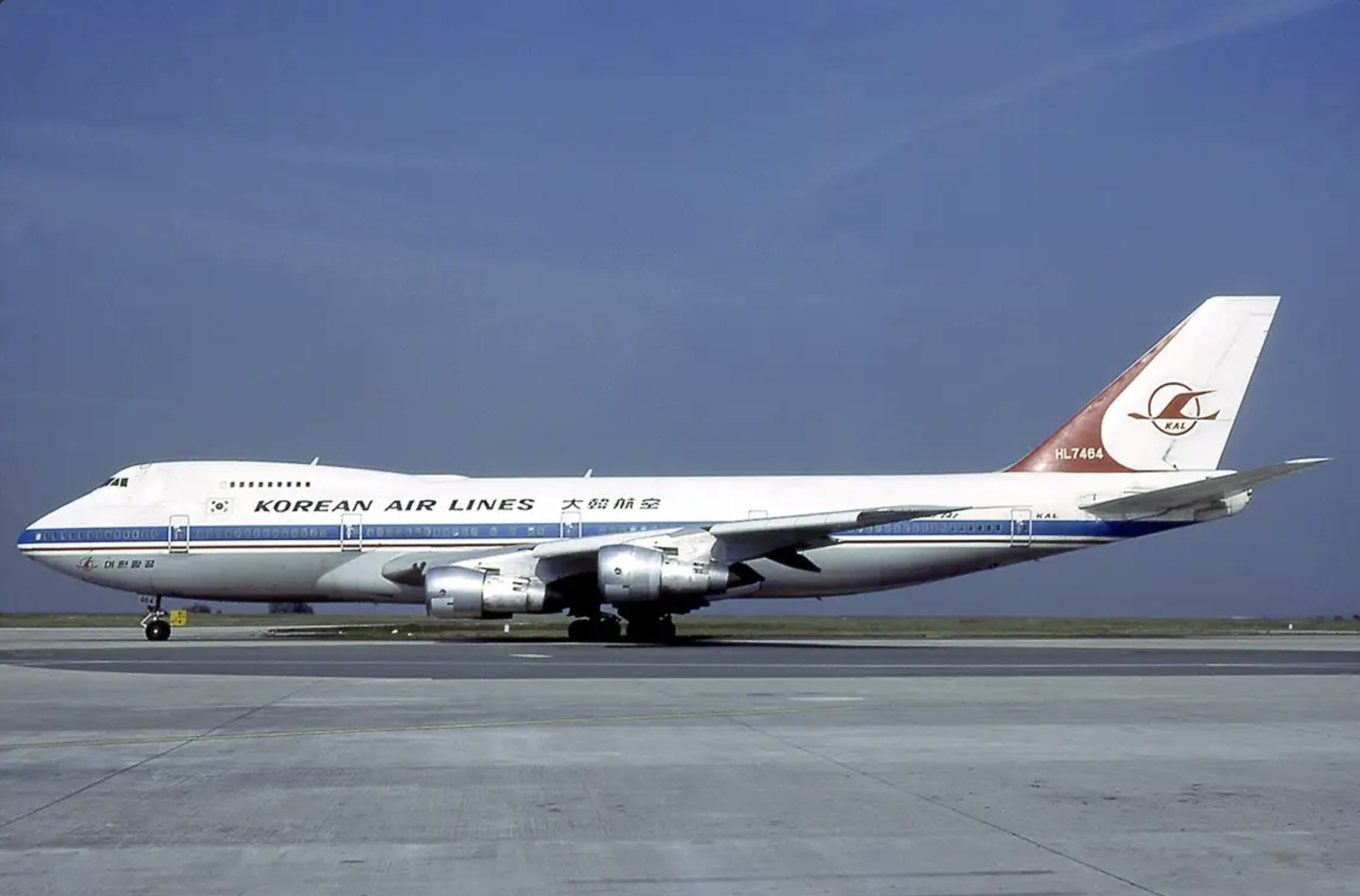
The Boeing 747-200 flight number 007 deviated far from its intended path. In just a short time, the aircraft flew into Russian airspace and crossed the Kamchatka Peninsula, home to several secret military installations of the Soviet Union. The Soviets sent two fighter planes to intercept the aircraft. According to recorded conversations between fighter pilots and Soviet ground controllers, Soviet fighter jets discovered the location of KAL’s flight and attempted to make contact with passenger jet KAL007. Failing to receive a response, the fighter plane fired missiles at KAL 007 and it crashed into the Sea of Japan, killing 269 passengers and crew.
Soviet suspicions became even more intense because KAL KE007 entered Soviet territory not long after the US RC-135 reconnaissance aircraft did the same thing, especially since the area
infiltrated was the Soviet Union’s limited strategic military zone.84 The Soviets admitted that the aircraft was indeed a passenger jet, however, high-ranking Soviet military officials stated that the KAL flight was involved in espionage. The Reagan administration responded by suspending all Soviet passenger air service to the United States; and canceling several agreements it was negotiating with the Soviets. Despite heated public rhetoric, many Soviet and American officials and analysts privately agreed that the incident was simply a tragic misunderstanding
According to Alexander Dallin, an American-Soviet historian, in the restricted military zone around the Kamchatka Peninsula, there were nine Soviet nuclear-powered submarines including 29 submarine-borne missiles, especially at that time, the ships were said to be planning to carry out missile tests, so increasing sensitivity. Before the order to shoot down came, the Soviet fighter jet pilots had signaled in international code that they had violated Soviet territory, however, the pilots did not pay attention. The fighter jet then sent a missile as a warning. Never getting a response, the jet finally released two missiles as the order came. Before being shot, KAL KE007 was no longer in Soviet territory, however, because it was considered that he had received very important information, the KAL 007 shooting incident could not be avoided. After being missile, the plane is known to have survived for 90 seconds to 12 minutes before falling into the Sea of Japan about 30 miles (48 km) from Sakhalin Island.
In international law, provisions regarding territorial violations are regulated in the 1944 Chicago Convention. According to Article 1 and Article 6 of the 1944 Chicago Convention, every country has full and exclusive sovereignty over the air space above its territory. Based on Article 6 of the 1944 Chicago Convention, no scheduled air transport can fly to other member countries, unless it has obtained prior permission or another form of flight.
On March 1, 23, Chinese military officials criticized the United States (US) in a statement issued after a US spy, Boeing P-8A Poseidon, patrol and reconnaissance aircraft operated by the US Navy flew over the Taiwan Strait. The aircraft was developed for maritime surveillance, anti-submarine warfare search and rescue missions. The US 7th Fleet in a statement said the aircraft flew over waterways in international airspace, however, China claimed the warplanes deliberately disrupted the regional situation endangering peace and stability in the Taiwan Strait, in a statement published on its website government-affiliated with the People’s Liberation Army (PLA).
Condemning the presence of US warplanes over the Taiwan Strait and accusing the US of publicly exaggerating it, the Chinese military also released a statement by Army Senior Colonel Shi Yi, spokesperson for China’s PLA Eastern Theater Command, in response to the Poseidon appearance. On March 1, 2023, PLA Eastern Theater Command Forces remained vigilant at all times and firmly guarded China’s national sovereignty and territorial integrity. Meanwhile, the US Navy’s 7th Fleet in its own statement regarding flights over the Taiwan Strait said that the lawful transit demonstrated US commitment. towards a free and open Indo-Pacific. The US will continue to fly, sail and operate wherever permitted by international law including within the Taiwan Strait.
In addition to spying on aircraft, citizens can also be punished for spying (espionage). The Chinese government arrested its own citizens accused of working as spies for the United States. This action is thought to be in response to the US arresting two of its own soldiers who leaked serious information to China. Law enforcement officers arrested a man named Zeng Moumou (52) who worked for a military contractor company in the country.
7. World Peace Bridge
At the peak of the Cold War between the West led by the United States and the East led by the Soviet Union was at its peak, West Germany’s position was at the leading edge of the war because for more than 40 years the Soviet Union and the Western Bloc had split into two camps, NATO forces with the Pact. Warsaw exchanged gunfire in Northern Norway and the far east of Turkey, and tensions often came close to nuclear war. On May 28, 1987, a young West German man named Mathias Rust, who was obsessed with flying and politics, wanted to build a bridge to world peace, because if war broke out between the West, led by the United States, and the East, led by the Soviet Union, then West Germany would become a victim.
Mathias Rust, who was obsessed with flying and politics, flew to the Soviet Union via the Western route using a 1972 Cessna aircraft. Mathias Trust succeeded in breaking through the Soviet Union’s fighter jet fleet and air defense system using a Cessna 172 aircraft and landed in the field. Red heart of Moscow Soviet Union, it was not easy for foreigners to enter the Soviet Union. In an instant, the Cessna 172 aircraft was surrounded by a large number of people, and Mathias Rust came out of the aircraft calmly and confidently while smiling at the people gathered around the Cessna 172 aircraft. At that time Mathias Trust was 18 years old, had an obsession with flying and politics, so he took a flying course in Hamburg, Germany and had accumulated 50 flying hours.
Mathias Rust using a Cessna 172 aircraft approached the most dangerous restricted zone in the world. The Soviet Union’s borders extended east to west from the Sea of Japan to Poland and from the Arctic Circle to the Iranian border. The length of the border line is about 60 thousand kilometers and all Russian military power is concentrated in the region. They have three divisions, one tasked with radar posts, one with missile units, and the other with fighter aircraft whose function is to intercept attacks coming from the air.
When Mathias Rust directed his dragonfly plane toward the Soviet Union, it encountered more than 2,000 fighter planes and about 8,000 missile launchers stationed along the border. The system is designed in such a way as to ward off attacks by US bombers and protect cities and military installations, which are equipped with several of sophisticated aircraft. These include the MiG-25, which was designed to intercept the US Lockheed SR-71 Blackbird and is capable of flying three times the speed of sound; The Tupolev TU-128, the largest fighter aircraft ever, patrolled the Soviet polar regions and was capable of firing missiles up to 5 meters long, while it was also armed with hundreds of small MiG-23 swing-wing fighter aircraft stationed at air bases near the border.
The toughness and sophistication of the defense was designed for a specific task: namely blocking US bombers such as the Boeing B-52, which is the size of a passenger aircraft and tends to fly high. Because of its large size, the signal reflected on the radar screen is also larger. This is the same problem as most current radar systems. The Soviet air defense radar system was only able to recognize large objects and was less effective at detecting small, low-flying aircraft such as the Cessna 172. Signals from small aircraft such as the low-flying Cessna 172 were difficult to detect; because the signal reflection was covered by the surrounding hills and buildings. . That’s why the MiG pilots had to be focused on being able to determine the location of the small target. Coincidentally, Mathias Rust’s flight also coincided with Border Guard Day. Most of the guards were on holiday. Just on that day, once a year, there was a gap in the Soviet border guard system. This added to the confusion on the Soviet side; so that when Rust’s plane broke into airspace they failed to identify him.
As a sovereign state whose airspace is violated by an aircraft without permission or obtaining prior approval, that state is obliged to give a warning of the aircraft’s violation, order the aircraft to return or leave the airspace or order it to land. If there is a violation of airspace, the country can protest through diplomatic channels, so that the country registering the aircraft apologizes and if it causes losses suffered by its citizens.
C. KOREAN AIRLINES KAL007 SHOOTING CASE
This item describes flight KAL007; civil reconnaissance aircraft; KAL007 passenger compensation including the legal basis, amount of compensation for KAL007 passenger; human rights (HAM); claim operational costs; airspace violations; the international community’s response; violation of Article 3 bis of the 1944 Chicago Convention; alleged RC-135 reconnaissance aircraft; alleged United States spy; the target of assassinating members of the United States Congress; United States President Ronald Reago’s response was as follows:
1. Flight KAL007
On August 31, 1983, a Korean Airlines (KAL) Boeing 747-230B, flight number KAL007, registration HL7442 on its flight from New York, United States to Gimpo International Airport in Seoul, South Korea stopped at Anchorage International Airport, Alaska to refuel and change aircrew. The next flight was supposed to take the Pacific Ocean international flight route R-20, crossing Japan before entering Gimpo Airport in Seoul, South Korea, but in reality, after changing crew and refueling, KAL007 deviated 322 km to the west enters the Kamchatka peninsula, continues to the Sea of Okhotska before arriving at over the air space of Sakhalin island.
The substitute pilot captain should, before making a connecting flight, have the obligation to make a flight plan containing the call sign of the aircraft, type of aircraft, time of take-off, time of arrival of the aircraft at the destination airport, navigation equipment used, fuel carried, airport alternative landings, flight positions, etc. After the flight plan is approved by air traffic controllers, it is entered into the computer in Inertial Navigation Services (INS) which will work automatically to Gimpo Airport, Seoul, South Korea. Due to the flight captain’s negligence or an error in entering INS, KAL diverted its flight to the Kamchatkan peninsula.
By KAL007 procedures before take off, the first officer seeks information at the briefing office to prepare a flight plan regarding the flight which includes altitude, weather news, wind direction, type of clouds, checkpoint, departure and arrival times at the destination airport, and route. the flight, the fuel required, and alternative airports are all entered into the inertial navigation system (INS) computer so that the flight automatically follows the route in the INS, it is not entered into the INS so that the direction of the flight deviates from the territory of the Soviet Union.
The KAL007 aircraft should have flown via the R-20 international air route which is approximately 28.2km from the border of the Soviet Union and continued straight until it passed the island of Hokkaido, then turned towards Gimpo International Airport in Seoul, South Korea, but a few minutes after takeoff, the KAL 007 aircraft turned right, deviated from the direction of 245 degrees, which should have been 220 degrees and continued until it entered Soviet Union airspace, near the Kamchatkan peninsula, which was a very sensitive area, so KAL007 was intercepted by Soviet Union fighter aircraft.
After KAL007 entered the air space of the Kamchatka peninsula, the Soviet Union’s radar captured the movement of the aircraft, then the Soviet Union authorities immediately sent a Shukoi SU-15 fighter jet from the Soviet Union’s Petropavlovsk naval base along Kamchatka. When the Shukhoi SU-15 was about to catch up with KAL007, the KAL007 aircraft had time to return to international air space. Before the Shukhoi SU-15 had returned to base, KAL007 was detected again entering Soviet Union airspace, at that time the Shukhoi SU-15 took a stance following the KAL007 aircraft. Through flashing navigation lights and strobes, the Shukhoi SU-15 acknowledged that it had succeeded in identifying the object it was following as a civil aircraft and not a spy aircraft. Colonel Gennadi Osipovich, one of the fighter jet pilots who was trailing, also admitted that he saw that the plane was civilian.
When KAL007 made contact with Japanese air traffic control, it was allowed to gain altitude, but before it reached altitude, KAL007 had time to dodge, the Shukhoi SU-15 aircraft began to become suspicious and reported it to the military base. Suspicions were increasingly raised because KAL007 entered Soviet air space not long after the United States RC-135 reconnaissance aircraft carried out spying activities, especially since the area around the Kamchatka peninsula was a military zone where there were nine Soviet Union nuclear-powered submarines including 29 ship-borne missiles. dive. Moreover, the ship is said to be planning to carry out missile tests, of course adding to the sensitivity.
Before firing, the Shukhoi SU-15 had signaled in international code that KAL007 had violated the Soviet Union’s airspace, however it did not elicit a response from KAL007, then the fighter jet sent a missile as a warning, nor did it receive a response from KAL007, finally it launched an air missile at air. In fact, KAL007 was no longer in the territory of the Soviet Union, however, because it was deemed that sufficient information had been obtained, shooting could no longer be avoided. In 1992, the International Civil Aviation Organization (ICAO) conducted an investigation after the Soviet Union opened the black box. The results of the investigation released by ICAO stated that the “heading” mode in the autopilot feature caused the KAL007 aircraft to drift far into Soviet Union airspace. Whether the pilot failed to change the autopilot settings (inertial navigation service-INS) to change the flight direction, ICAO cannot conclude with certainty
2. Civilian Reconnaissance Aircraft
Before the KAL007 incident, aircraft shootings during the Cold War did not only occur on flights RB47 and U2, but also occurred on Air France (1952), EL AL Constellation (1955), DC-3 Red Cross (1969), DC -8 Alitalia (1970), Boeing 727 Libya (1973), Korean Airlines (1978) and Boeing 747 KAL007 (1983). On September 1, 1983, Korean Airlines (KAL) flight number 007 made its final flight from New York City to Seoul, South Korea transiting in Anchorage, Alaska.
The shooting down of Korean Airlines flight number KAL007, the United States was accused of sending a surveillance aircraft. RC-135W and E-8C aircraft using civilian “flags” operate between Hainan Island and the Paracel Islands, South China Sea (SCS) to collect intelligence information. This unlawful act was discovered when the US Air Force’s RC-135 electromagnetic signal detection and collection aircraft crossed the South China Sea with the registration code of a Malaysian civil aircraft. The “Malaysian civilian” aircraft took off from United States military air bases in Okinawa and Guam, after the six-digit code sent automatically by the aircraft when it began interrogation by air traffic controllers (ATC) in a country, apparently indicated that the aircraft These aircraft were military aircraft, although the Boeing RC-135W and E-8C were similar to the Boeing 707-200 civilian aircraft, and the reconnaissance aircraft followed the path of commercial aircraft, in the end, the United States’ evil intentions were still exposed.
The masking of civilian ‘flagged’ reconnaissance aircraft by the United States cannot be accepted by the international community because it violates the 1944 Chicago Convention. Such actions are very dangerous for commercial aircraft, as experienced by Korean Airlins flight number KAL007 which was missileized by a Shukhoi SU-15 on 1 September 1983 because it was suspected to be a United States surveillance aircraft. This assumption makes sense because the Cold War between the West and East is currently escalating. Apart from that, the flight route from New York to Seoul, South Korea happened to have a United States spy plane a few minutes before flight KAL007 which passed around the island of Sakhalin which did not comply with the Air Defense Identification Zone (ADIZ) adopted by the Soviet Union. Finally, KAL007 was shot by a Shukhoi SU-15 fighter aircraft as a form of defense against threats. The Soviet Union’s actions were still not justified because shooting down an unarmed civilian aircraft was contrary to international law (human rights).
As a result of the shooting down of KAL007 by the Shukhoi-SU 15 fighter aircraft, there was a wave of protests from countries that supported the United States, including the United States, South Korea, Japan, China, Australia, Canada, England, New Zealand, Zaire, Liberia, the Netherlands, France, Sweden, Belgium, Italy, Germany, Singapore, Fiji, Colombia, Ecuador and Paraguay. The loudest protest was carried out by the International Federation of Airline Pilot Association (IFALPA) and 11 (eleven) countries out of 16 countries that had flights to the Soviet Union temporarily stopped commercial flights.
In October 1983, ICAO examined black boxes, but very little information was provided. The main cause of the mystery of the KAL007 accident is why the flight did not take the route it was supposed to take on the R-20 Pacific Oceana, which was related to the autopilot (inertial navigation services-INS) settings, so the flight deviated toward Soviet Union airspace. Before take-off, the pilot captain did not set the INS so that the flight direction deviated towards prohibited airspace; because the captain flew on the wrong path and failed to set the INS towards the correct flight route, however, the results of the ICAO investigation did not prove that there was any surveillance action from the United States. ICAO member countries condemn the military’s use of weapons against civilian aircraft, even though the Soviet Union has ratified Article 3 bis of the 1944 Chicago Convention which has been in effect since 1998.
3. Compensation for KAL007 Passenger Losses
a. Legal Basis for Compensation
South Korea ratified the 1955 Hague Protocol on July 13, 1967 which came into force on October 11, 1967, although it did not ratify the 1929 Warsaw Convention, based on Articles XXI and XXIII the 1929 Warsaw Convention applies. The United States ratified the 1929 Warsaw Convention on July 31 1934 which came into effect on 29 October 1934, however, the amount of compensation was changed by the 1955 Hague Protocol, from US$ 10,000.00 (ten thousand) United States dollars to US$ 20,000.00 (twenty thousand) United States dollars. The United States did not agree to the amount of compensation of US$ 20,000.00 (twenty thousand) United States dollars, and threatened to leave as a member of the International Air Transport Association (IATA), then the Montreal Agreement of 1966 was agreed which stipulated that all flights from, to or passing through the United States must be willing to provide compensation of US$ 50,000.00 (fifty-eight thousand) United States dollars without attorney fees or US$ 75,000.00 (seventy-five thousand), United States dollars including attorney fees, therefore the legal basis for the KAL007 shooting case applies the 1929 Warsaw and Montreal Conventions Agreement of 1966.
b. Amount of KAL007 Passenger Compensation
Based on the 1929 Warsaw Convention, the principle of presumption of liability is adhered to, therefore, based on the above legal basis, the amount of compensation according to the Montreal Agreement of 1966 for each KAL007 passenger is US$50,000.00 (fifty-eight thousand) United States dollars without attorney’s fees or US$75,000.00 (seven twenty-five thousand) United States dollars including attorney’s fees, but this amount does not apply if there is an error or negligence or careless or intentional act of the airline company including employees, employees, agents or representatives acting for and on behalf of KAL007.
Based on evidence that the captain of flight KAL007, in his capacity as an employee of Korean Airlines, was negligent in diverting the flight to the Kamchatka peninsula, six members of the jury at the United States Federal Court in Washington in 1989 awarded damages of US$ 50,000,000.00 (fifty million) US dollars. Union which was divided equally among 137 victims, due to KAL007’s error in deviating from the air route which was supposed to be via the Pacific Ocean air route, while the other passengers received compensation of US$ 75,000.00 (seventy-five) thousand United States dollars including attorney’s fees, based on the Convention Warsaw 1929 which ratified The Hague Protocol 1955.
Compensation for KAL007 Passenger Losses
a. Legal Basis for Compensation
South Korea ratified the 1955 Hague Protocol on July 13, 1967 which came into force on October 11, 1967, although it did not ratify the 1929 Warsaw Convention, based on Articles XXI and XXIII the 1929 Warsaw Convention applies. The United States ratified the 1929 Warsaw Convention on July 31 1934 which came into effect on 29 October 1934, however, the amount of compensation was changed by the 1955 Hague Protocol, from US$ 10,000.00 (ten thousand) United States dollars to US$ 20,000.00 (twenty thousand) United States dollars. The United States did not agree to the amount of compensation of US$ 20,000.00 (twenty thousand) United States dollars, and threatened to leave as a member of the International Air Transport Association (IATA), then the Montreal Agreement of 1966 was agreed which stipulated that all flights from, to or passing through the United States must be willing to provide compensation of US$ 50,000.00 (fifty-eight thousand) United States dollars without attorney fees or US$ 75,000.00 (seventy-five thousand), United States dollars including attorney fees, therefore the legal basis for the KAL007 shooting case applies the 1929 Warsaw and Montreal Conventions Agreement of 1966.
b. Amount of KAL007 Passenger Compensation
Based on the 1929 Warsaw Convention, the principle of presumption of liability is adhered to, therefore, based on the above legal basis, the amount of compensation according to the Montreal Agreement of 1966 for each KAL007 passenger is US$50,000.00 (fifty-eight thousand) United States dollars without attorney’s fees or US$75,000.00 (seven twenty-five thousand) United States dollars including attorney’s fees, but this amount does not apply if there is an error or negligence or careless or intentional act of the airline company including employees, employees, agents or representatives acting for and on behalf of KAL007.
Based on evidence that the captain of flight KAL007, in his capacity as an employee of Korean Airlines, was negligent in diverting the flight to the Kamchatka peninsula, six members of the jury at the United States Federal Court in Washington in 1989 awarded damages of US$ 50,000,000.00 (fifty million) US dollars. Union which was divided equally among 137 victims, due to KAL007’s error in deviating from the air route which was supposed to be via the Pacific Ocean air route, while the other passengers received compensation of US$ 75,000.00 (seventy-five) thousand United States dollars including attorney’s fees, based on the Convention Warsaw 1929 which ratified The Hague Protocol 1955.
During the cold war political tensions increased with air defense systems and increased vigilance, especially when flying near border areas. In the period from 1950 to 1970, no less than 15 US military aircraft were shot down by Soviet fighter aircraft, while three Soviet aircraft were shot down by the Americans. Most of these incidents occurred in the Asia-Pacific region, off the Asian coast of Russia or around the Japanese archipelago, but there were also attacks in Europe. In March 1953, a Czech-piloted Russian MiG fighter jet shot down a US F-84 flying over German airspace, while in September 1958, a US C-130 reconnaissance aircraft carrying a crew of six and 11 intelligence agents, shot down over Soviet territory by four MiGs, all six crew members were confirmed dead but the fate of the intelligence agent was never revealed. In January 1964 three American crew members were killed when their training aircraft was shot down by a Soviet MiG fighter over East Germany. Attacks on civilian aircraft are rare, although they do occur occasionally. In July 1954, a Chinese-piloted Soviet fighter plane shot down a Cathy Pacific DC-4 flying to Hong Kong, killing ten people. A Bulgarian MiG pilot shot down an Israeli civil airliner in July 1955, after the plane mistakenly veered into Bulgarian airspace, killing 58 passengers and crew.
1. Human Rights (HAM)
As mentioned above, on September 1, 1983, a Boeing 747 aircraft belonging to Korean Airlines flight number 007 was on a flight from New York City to Seoul, South Korea, transiting at Anchorage Alaska Airport to refuel, shot down by a Soviet Union fighter aircraft which killed 269 people including passengers and crew members. The shooting down of an unarmed civilian aircraft caused anger among the world community; because it violated the concept of human rights (HAM). In April 1978, previously Soviet Union fighter aircraft also shot down a Korean Airlines Boeing 707 flying from Paris to Seoul across the North Pole, mistakenly entering Soviet airspace and a missile by the fighter aircraft, but it was not destroyed and landed on a frozen lake. , but all 109 passengers and crew survived except for two who died.
2. Operational Cost Demands.
As mentioned above, on April 20 1978, a Korean Airlines Boeing 707, flight number 902 on the Paris-Anchorage-Seoul flight route was shot down by a Soviet Union Sukhoi Su-15 fighter aircraft which accidentally made an emergency landing in Murmansk, United States. Soviet. Surprisingly, the South Korean side was actually asked for compensation for the quite expensive operational costs of the two jets, instead of focusing on the loss of life and injuries as well as material losses from the destruction of the aircraft and its passengers. The tragedy of the shooting down of the military aircraft began when the aircraft’s navigation equipment on the flight from Paris to Seoul experienced a malfunction which caused the pilot to decide to fly to the right instead of heading straight southwest towards the United Kingdom, Iceland and Greenland, into Union airspace. Soviets above the Arctic Circle, passing through the Greenland Sea, Svalbard, and Barents Sea.
The Soviet Union’s fighter aircraft suspected that the aircraft was a US aircraft disguised as a civil aircraft to carry out a reconnaissance mission, then the Soviet Union flew two Sukhoi Su-15 fighter aircraft and shot down the Boeing 707, then forced it to make an emergency landing at near the Finnish border on a frozen lake. Before being shot down, the pilot of the Sukhoi Su-15 jet was following the Korean Airlines Boeing 707 flight number 902, however, Korean Airlines did not respond and the aircraft entered Soviet territory without permission, the fighter jet shot the left wing of the aircraft. , as a result of this tragedy, two passengers died instantly and 107 passengers survived when they landed on a frozen lake. In this tragedy, it was the Soviet Union that demanded compensation from the South Korean government worth US$100 thousand, as the cost of rescue operations. At that time, the world was shocked by the tragedy, especially since it was the Soviet Union who asked for compensation, not the passengers and airline companies who asked for compensation. At that time, tensions were peaking between the Western bloc and the Eastern bloc, with the support of the Western bloc, the demand for compensation for operational costs was not never paid.
3. Airspace Violation
In international law, provisions regarding territorial violations are regulated in the 1944 Chicago Convention110. According to Article 1 and Article 6 of the 1944 Chicago Convention, every country has full and exclusive sovereignty over the air space above its territory. Based on Article 6 of the 1944 Chicago Convention, no scheduled air transport can fly to other member countries, unless it has obtained prior permission or another form of flight.
As a sovereign state whose airspace is violated by an aircraft without permission or obtaining prior approval, that state is obliged to give a warning of the aircraft violation, order the aircraft to return or leave the airspace, or order it to land. According to the legal teaching (doctrine) regarding self-defense which teaches that the use of weapons to force aircraft to commit territorial violations is excessive and not commensurate with the threat faced, in the country can be said to be abusing power (abuse of power) so that the country can be sued by the country where the aircraft is registered, to compensate for losses suffered by passengers for and on behalf of the victims.
The shooting down of Korean Airlines flight number 007 also violates international law, especially the concept of human rights (HAM), because innocent passengers became victims. In addition, the use of weapons to force civil aircraft is not in accordance with the principle of international air law “safety first” as implied, or as stated in 44 letter (a) of the 1944 Chicago Convention.
4. International Community Response
The shooting incident of the Korean Airlines Boeing 747 Queen of the Skies with flight number 007 (flight 007) finally received a firm response from the international community, through the US command. This is because the incident which killed 269 people was the second, after the first occurred in 1978 and left two people dead. The Reagan administration, for its part, alleged that the Soviet Union had deliberately shot down an airplane and thereby murdered defenseless civilians in cold blood. President Reagan called the shooting a “massacre” and “an act of barbarism.” In 1992, the International Civil Aviation Organization (ICAO) launched an investigation after the Soviets opened access to the black boxes. The results of the investigation, released a year later, said the “heading” mode in the autopilot feature was the reason why the plane was able to veer so far towards the Soviet Union. Whether it was because the pilot failed to change the settings or the plane had already gone off course when the Inertial Navigation System (INS) was activated, ICAO could not conclude with certainty. The KAL007 shooting incident dramatically increased cold war tensions between the Soviet Union and the United States.
5. Violation of Article 3 of the 1944 Chicago Convention
The 1944 Chicago Convention is a convention that aims to respect and protect the safety and security of international civil aviation. Initially it did not regulate interception, after the shooting case of KAL009 on 1 September 1983 which killed 269 passengers and crew members, an amendment was made to Article 3 of the 1944 Chicago Convention. The Interception was intended to implement sovereignty as regulated in Article 1 of the 1944 Chicago Convention. Regulations regarding interception are regulated in the 1984 Montreal Protocol Article 3 bis which is an amendment to the 1944 Chicago Convention. In essence, every country must refrain from using weapons to intercept civil aircraft without carrying weapons, the use of weapons is only carried out at the final stage when necessary, because that is the Union’s action. The Soviets shooting KAL007 proved that the Soviet Union did not comply with the provisions of Article 3 bis of the 1944 Chicago Convention
6. Alleged RC-135 Reconnaissance Aircraft
Korean Air Lines flight 007 from New York to Seoul flew into Russian airspace due to a navigation error and was shot down by a Soviet fighter jet. All 269 passengers and crew, including 63 Americans, died. At first the Soviets thought the plane was a United States RC-135 reconnaissance plane, because at that time there were five planes in the area. With Soviet fighters behind him, KE007 asked Tokyo air traffic control for permission to ascend in stages. Such requests were common after long-distance flights that used up a lot of fuel in order to go higher and faster, but a few seconds later, the Soviet Union’s fighter aircraft fired tracer bullets. Initially, Soviet military officials did not recognize the civilian aircraft, with Marshal Nikolai Ogarchov initially insisting that the aircraft was a “false flag” operation carried out by the United States.
7. Allegedly a United States Spy
On September 1, 1983, a Korean Airlines Boeing 747-200, flight number 007, was shot down by a Soviet Union fighter jet because it was thought to be a United States (US) spy plane. This allegation is understandable considering that geopolitical tensions between the West led by the United States and the East led by the Soviet Union were escalating due to the Cold War. The incident began when flight KAL007 on the New York City to Seoul route stopped at Anchorage Airport, Alaska to refuel. After refueling, the flight was supposed to take an international route over the Pacific Ocean and cross Japan before entering South Korea, but because of the flight, KAL007 deviated 322 km to the west and entered the Kamchatka peninsula where there were nine Soviet nuclear-powered submarines including 29 submarine-borne missiles, continuing into the Sea of Okhotsk, before arriving in the sky over the island of Sakhalin.
8. Target Assassination of US Congressman
On September 1, 1983, Korean Air Lines Flight 007 on its second leg from Anchorage, Alaska to Seoul, South Korea was shot down by a Soviet interceptor into the Sea of Japan when it deviated from its intended route into Soviet territory. The total death toll was 269 passengers, including US Congressman from Georgia, Lawrence McDonald. These actions further increased tensions between the United States and the Soviet Union. According to Thomas Dunlop, the shooting of KAL007 targeted the assassination of Congressman Larry McDonald from the United States.
9. Response from President Ronald Reagan of the United States
According to the President of the United States (US), Ronald Reagon, Soviet Union fighter aircraft shot down Korean Airlines flight KAL007, killing 269 innocent men, women and children on board an unarmed civilian aircraft. This shooting is a crime against humanity that should never be forgotten in the United States or throughout the world. The victims who died were the result of the Soviet Union’s violation of every concept of human rights, the whole world condemned the Soviet Union’s actions. He in no way justified, legally or morally, what the Soviets were doing. This incident was not the first time the Soviet Union shot down an unarmed civilian aircraft as it crossed its territory. In another tragic incident in 1978, the Soviets also shot down an unarmed civilian aircraft. After identifying the aircraft as a civilian, the Soviet interceptor pilot clearly identified the civilian markings on the side of the aircraft, repeatedly questioning the order to shoot down a civilian aircraft. , and was ordered to shoot it down anyway.
D. CONCLUSIONS AND RECOMMENDATIONS
Based on the description above, the main problem is the inertial navigation system (INS), which coincidentally is the cold war is heating up, but under normal circumstances it could be resolved through diplomatic channels. The Soviet Union’s actions were driven by the reality of the cold war, where there had been many spies since the 1950s. On the other hand, the US accused the Soviet Union of carrying out massacres, violating the concept of human rights (HAM) because the cold war was at its peak. Another problem is Korean Airlines’ responsibility towards passengers who have to pay compensation based on the Montreal Agreement of 1966. If the judge considers that INS has an element of negligence, Korean Airlines’ responsibility will be unlimited (unlimited liability). It is recommended that all ICAO member countries comply with Article 3 bis of the 1944 Chicago Convention to refrain from using weapons against civil aircraft.